
Somnosphere
An immersive, audio-visual expression of the sleep experience
Somnosphere is an installation that makes the deeply personal experience of sleep accessible through a dynamic audiovisual environment. While sleep is typically a solitary and incommunicable state, Somnosphere asks a provocative question: What does it mean to be together while unconscious?
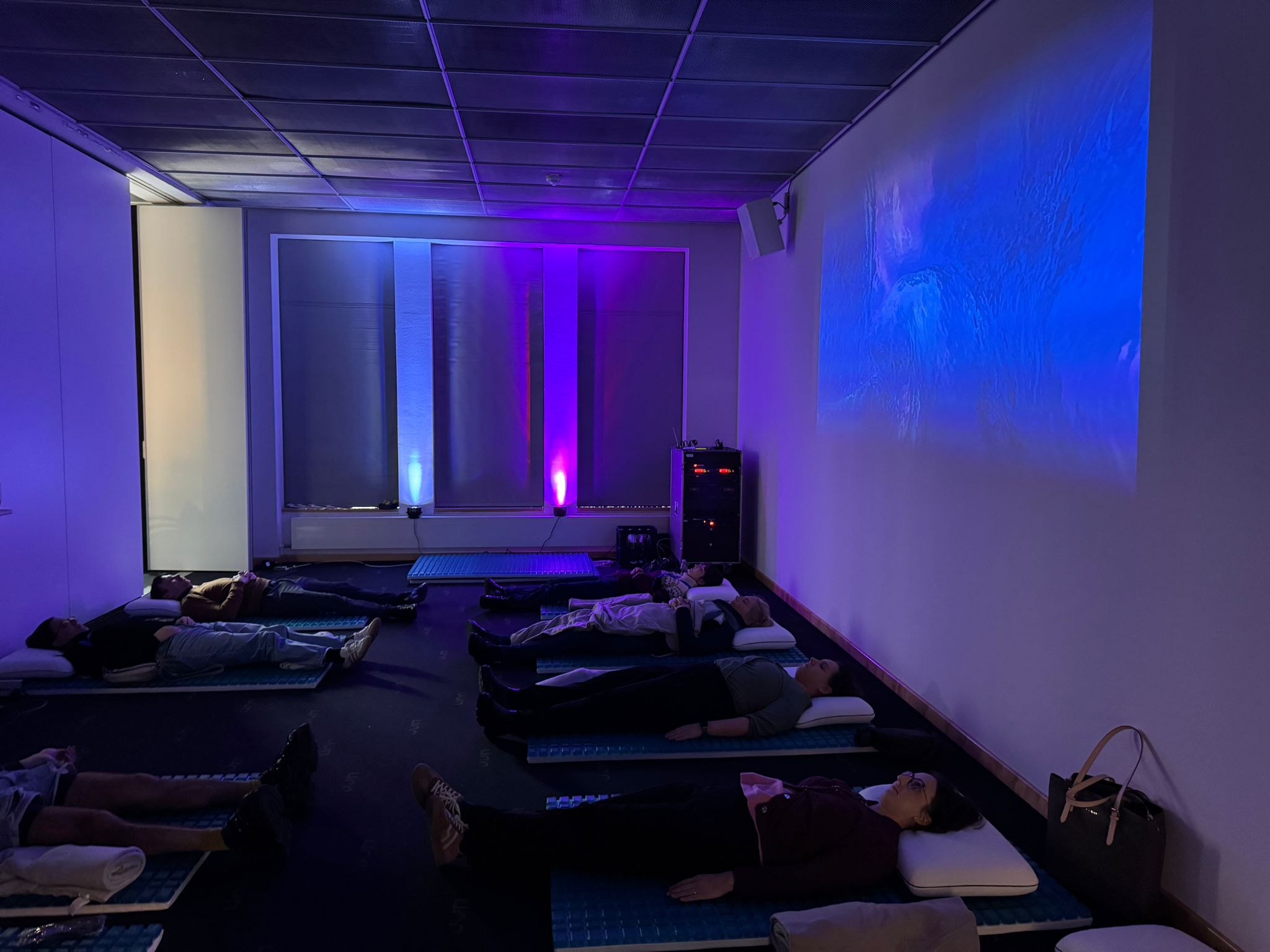
Somnosphere at the annual German Sleep Society (DGSM) conference in Hannover (2025)
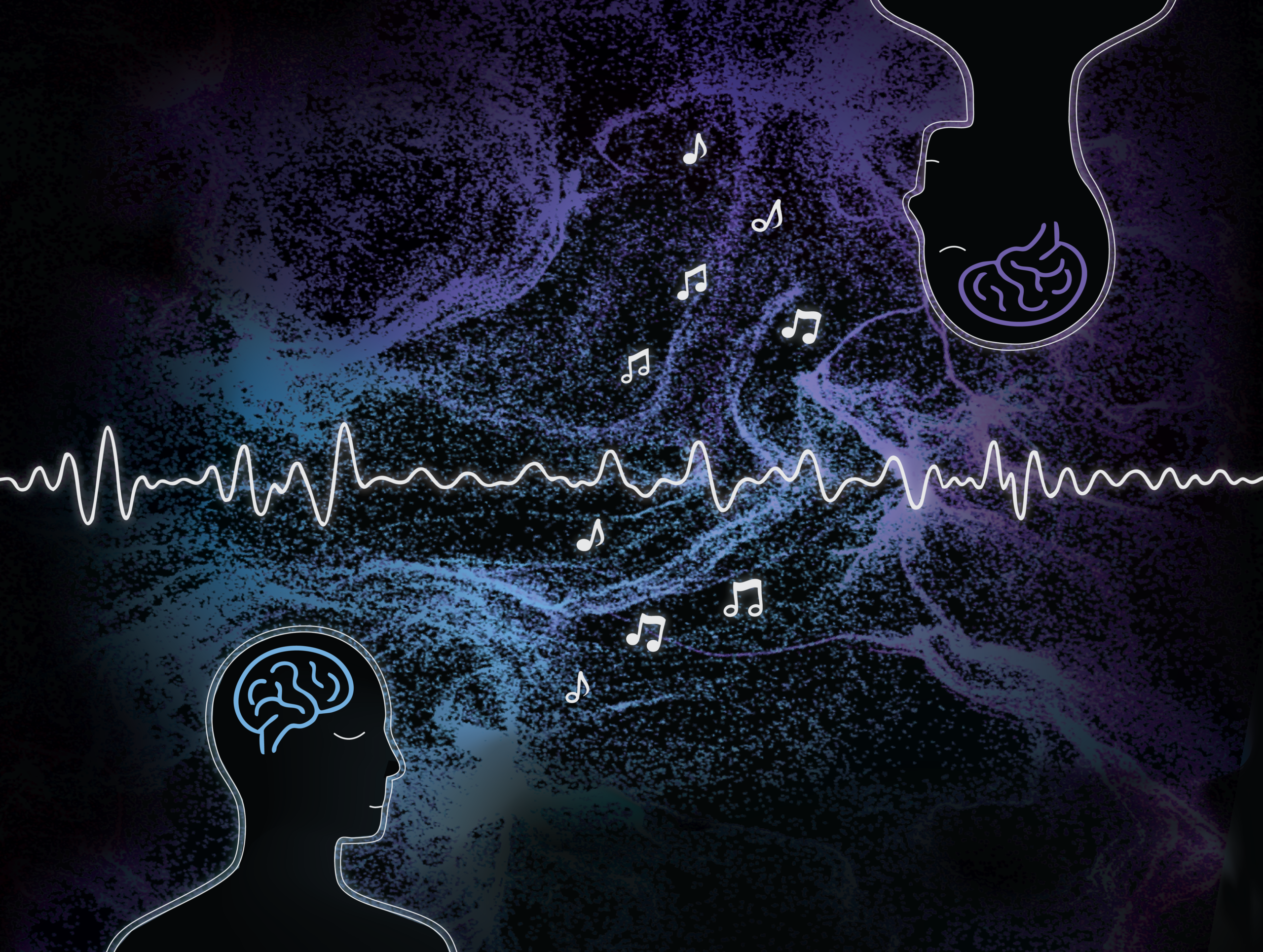
During sleep, we disconnect from the waking world, yet our brains remain responsive to sound. Building on this, Somnosphere creates a “closed loop” between two individuals in different locations, facilitating a sonic exchange in which each sleeper influences the other. By listening to real-time musical representations of each other’s sleep throughout the night, an intimate exchange is formed between two subconscious minds.
This exchange unfolds again in real-time within the installation space, based on previously-recorded data. Visitors are invited to step inside this environment, observing the progression of the two sleepers throughout the night. They hear generative music created within a live-coding environment, which is adapted from EEG and other physiological data recorded from the sleepers. This sonic representation is mirrored by algorithmically-generated visuals, which respond dynamically to the same patterns of shifting sleep cycles.
Rather than presenting sleep as static data, Somnosphere expresses it as a living experience that evolves over time. This work positions sleep not as an absent state, but as a medium of connection in which two distant bodies communicate and co-exist within a common nocturnal sonic world.
This project was developed as an interdisciplinary collaboration between all ten doctoral candidates of the Lullabyte network. It was first showcased in June 2025 at the Long Night of Sciences (LNDW) in Berlin, and has subsequently been adapted for presentation at conferences and exhibitions around Europe.
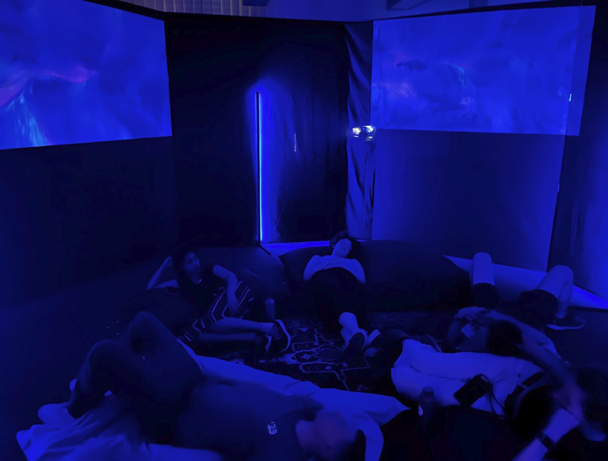
Somnosphere at the Long Night of Sciences, Berlin (2025)